
How Can rGO Electrodeposition Improve Screen-Printed Carbon Electrodes?
From rGO surface modification to redox response and downstream MIP electropolymerization.
Screen-printed carbon electrodes (SPCEs) are widely used for compact and cost-effective electrochemical sensing. Their performance, however, depends on the electrode interface as well as the sensing chemistry. One approach is to modify the carbon surface with reduced graphene oxide (rGO), a conductive graphene-derived material used in electrochemical sensor development [3, 5].
The short answer: rGO surface modification can change electrode morphology and electrochemical response [1, 3]. Electrodeposition-based processing offers a way to control aspects of surface modification, while drop-casting is simpler but can be affected by uneven drying. The best method depends on the material, electrode and application.
In this article, we compare these approaches and examine B&G’s own surface-imaging and electrochemical observations, including how an rGO-modified electrode behaves during a subsequent pyrrole electropolymerization step relevant to molecularly imprinted polymer (MIP) sensor fabrication.
Why Modify a Screen-Printed Carbon Electrode?
SPCEs provide a practical platform for sensor research because they are compact, easy to integrate with electrochemical instruments and suitable for a range of measurement applications. Modification with conductive or functional materials can change the electroactive interface and provide a foundation for further target-specific sensing chemistry [3, 5].
For graphene-based electrodes, the important questions are not only what material is used, but also how it is distributed across the working electrode, how it interacts with the underlying surface, and how the resulting interface behaves during electrochemical measurement.
Drop-Casting vs Electrodeposition: What Is the Difference?
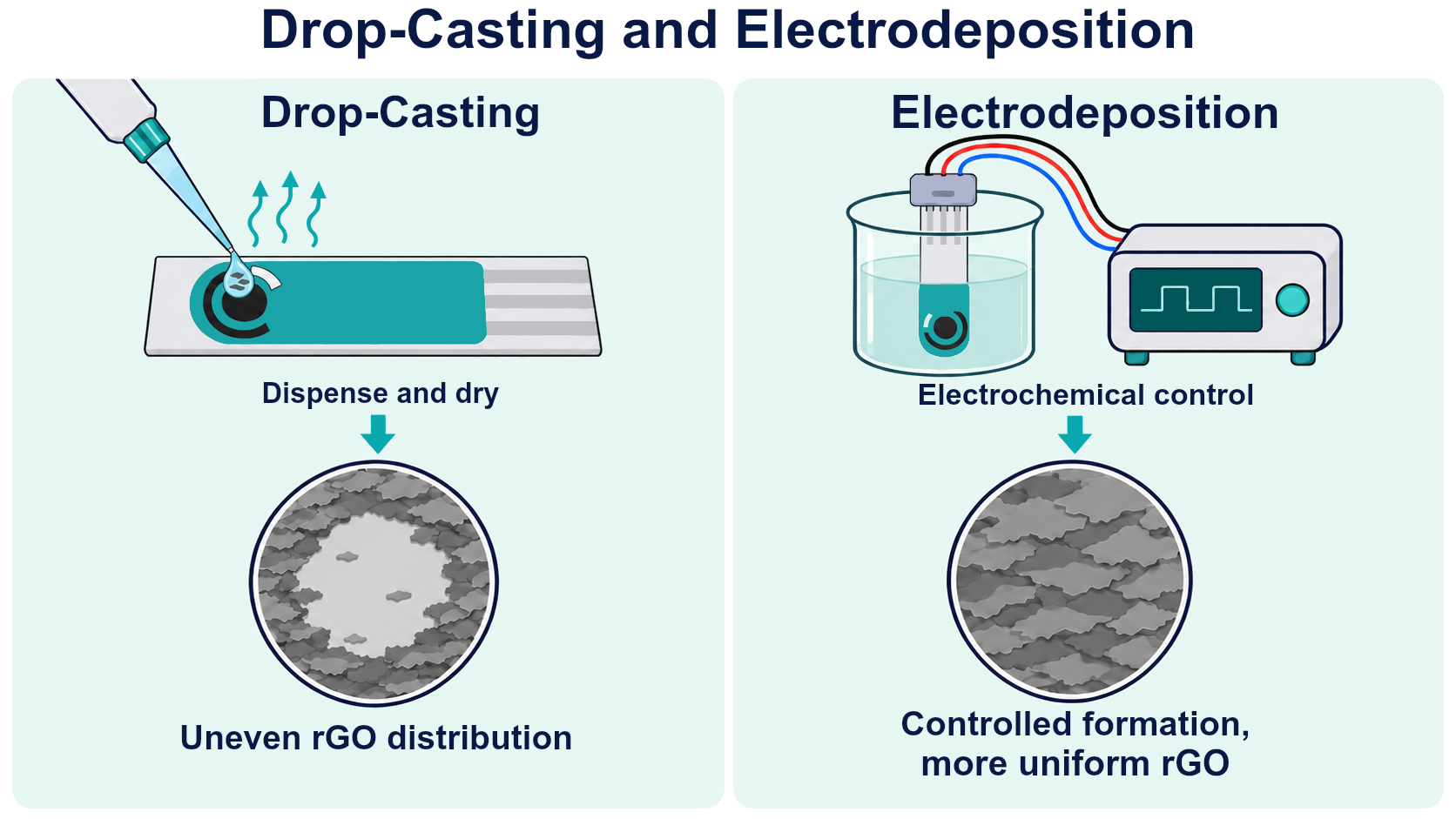
Drop-casting places a small volume of material dispersion on an electrode and allows the liquid to dry. Although simple and inexpensive, solvent evaporation can cause particle aggregation, uneven film distribution, and the coffee-ring effect, where material accumulates around the droplet edge.
These limitations can make coating uniformity and electrode-to-electrode reproducibility more challenging, particularly for applications requiring consistent electrochemical performance.
Electrodeposition-based modification uses controlled electrochemical conditions to form or transform functional layers at the electrode interface [1, 4]. Compared with conventional drop-casting, this approach offers greater control over the deposition process, supporting more uniform coating formation and tailored electrochemical interfaces.
In B&G's work, our developed rGO electrodeposition method achieved more uniform-looking surface coverage, with SEM characterisation and cyclic voltammetry demonstrating distinct surface modification and enhanced electrochemical response under the tested conditions.
| Consideration | Drop-casting | Electrodeposition-based Modification |
|---|---|---|
| Basic Approach | Apply material dispersion and allow solvent to evaporate | Form or modify functional layers under controlled electrochemical conditions |
| Coating Formation | Solvent evaporation may lead to uneven distribution, aggregation and coffee-ring effects | Electrochemical parameters can be adjusted to control layer formation and surface coverage |
| Process Control | Largely influenced by dispersion properties and drying conditions | Deposition conditions can be tuned to achieve desired surface characteristics |
| Sensing Applications | Simple approach for exploratory surface modification | Supports engineered functional interfaces for electrochemical sensing |
Recent studies illustrate different routes to functional rGO sensing interfaces, including drop-cast rGO/MXene composites on SPCEs [3] and electrochemically prepared rGO transistor arrays [4]. These examples highlight why preparation and functionalisation should be selected around the intended sensing interface and application.
What Did B&G Observe in rGO-Modified Electrodes?
B&G has developed an electrodeposition-based approach to prepare rGO-modified screen-printed carbon electrodes. We examined the resulting surfaces with scanning electron microscopy (SEM), evaluated their redox response with cyclic voltammetry (CV), and explored how the modified interface affects a subsequent pyrrole electropolymerization step for MIP development.
1. Surface Morphology: Before and After rGO Modification
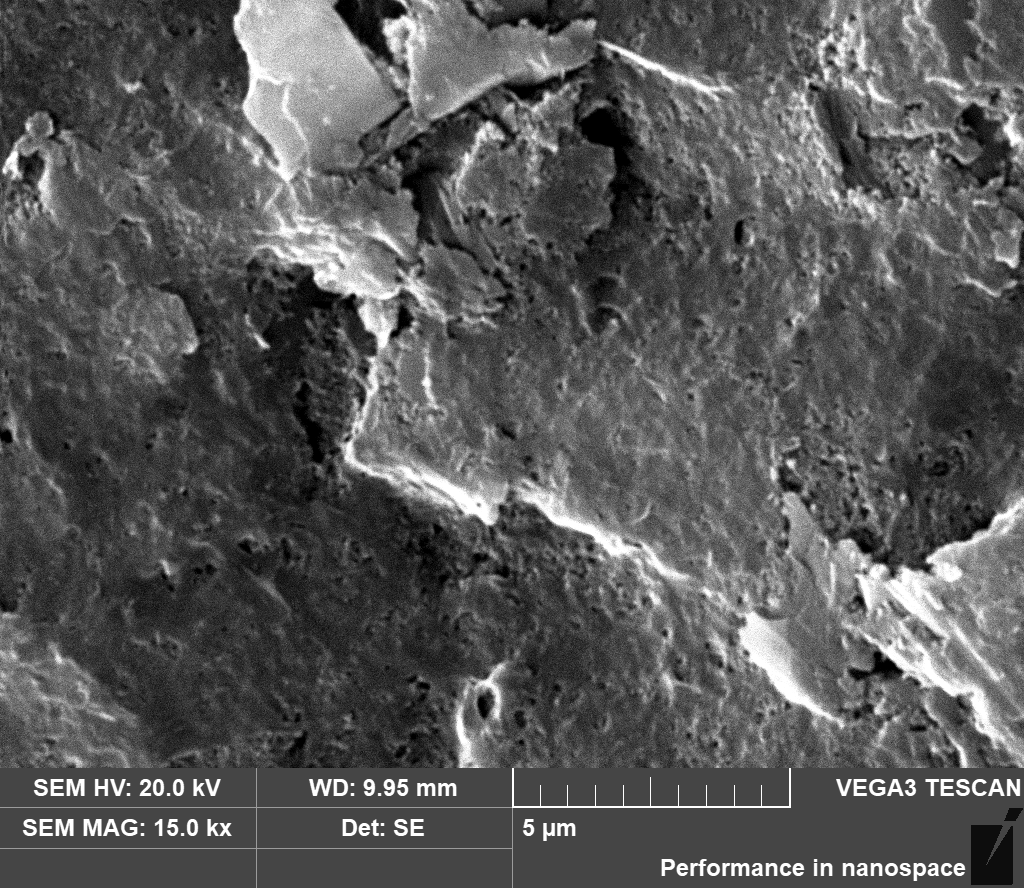
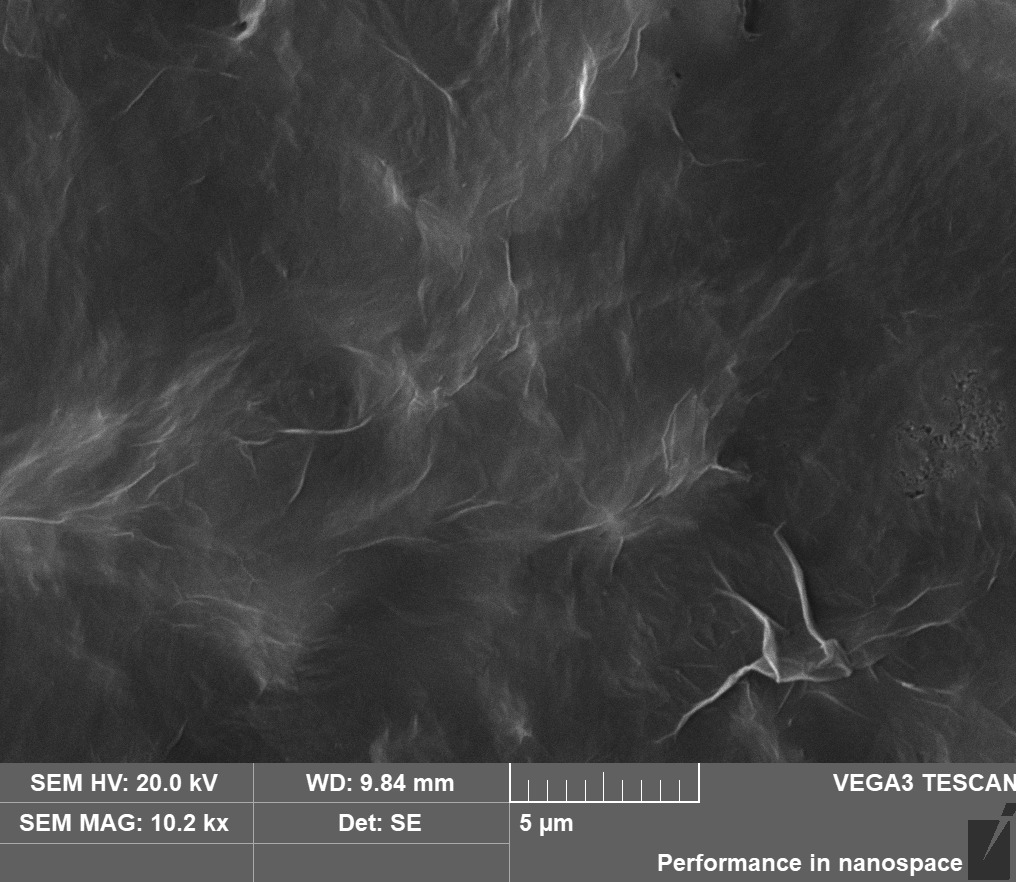
SEM imaging reveals a clear transformation in electrode surface morphology following B&G's developed rGO electrodeposition process.
Compared with the rough, irregular surface of the bare carbon electrode, the rGO-modified electrode exhibits a more continuous, sheet-like morphology with fewer prominent surface irregularities.
These observations highlight the effectiveness of our surface modification approach in creating a more uniform-looking functional electrode interface for electrochemical sensing applications.
2. Enhanced Electrochemical Performance: Fe(CN)₆ Cyclic Voltammetry
Stronger Redox Response Through rGO Surface Modification.
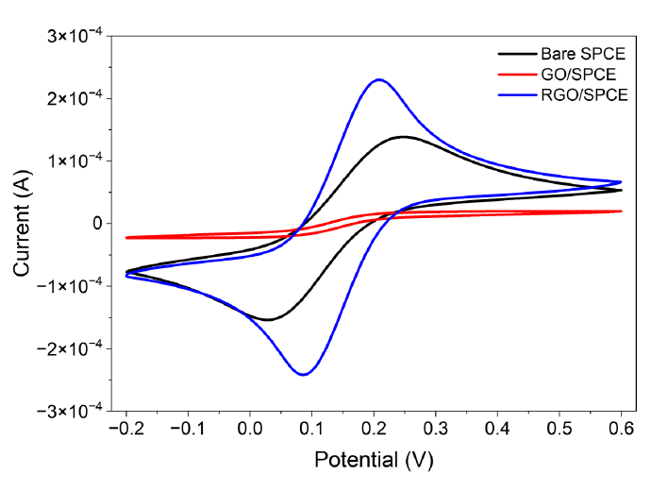
Cyclic voltammetry (CV) using the Fe(CN)₆³⁻/⁴⁻ redox probe demonstrates the electrochemical benefits of B&G's developed rGO electrodeposition method.
Compared with bare and GO-modified screen-printed carbon electrodes, the rGO-modified electrodes exhibited significantly higher redox peak currents and more pronounced oxidation and reduction peaks under the tested conditions.
These results are consistent with improved interfacial electron-transfer behaviour and enhanced electrochemical activity, providing a stronger foundation for subsequent electrode functionalisation and custom sensor development. Related rGO/MXene research uses CV and electrochemical modelling to characterise charge-transfer behaviour at functionalised SPCE interfaces [3].
3. Beyond Redox Response: Enabling MIP Sensor Development
Enhanced Electropolymerization Activity for Functional Sensor Development.
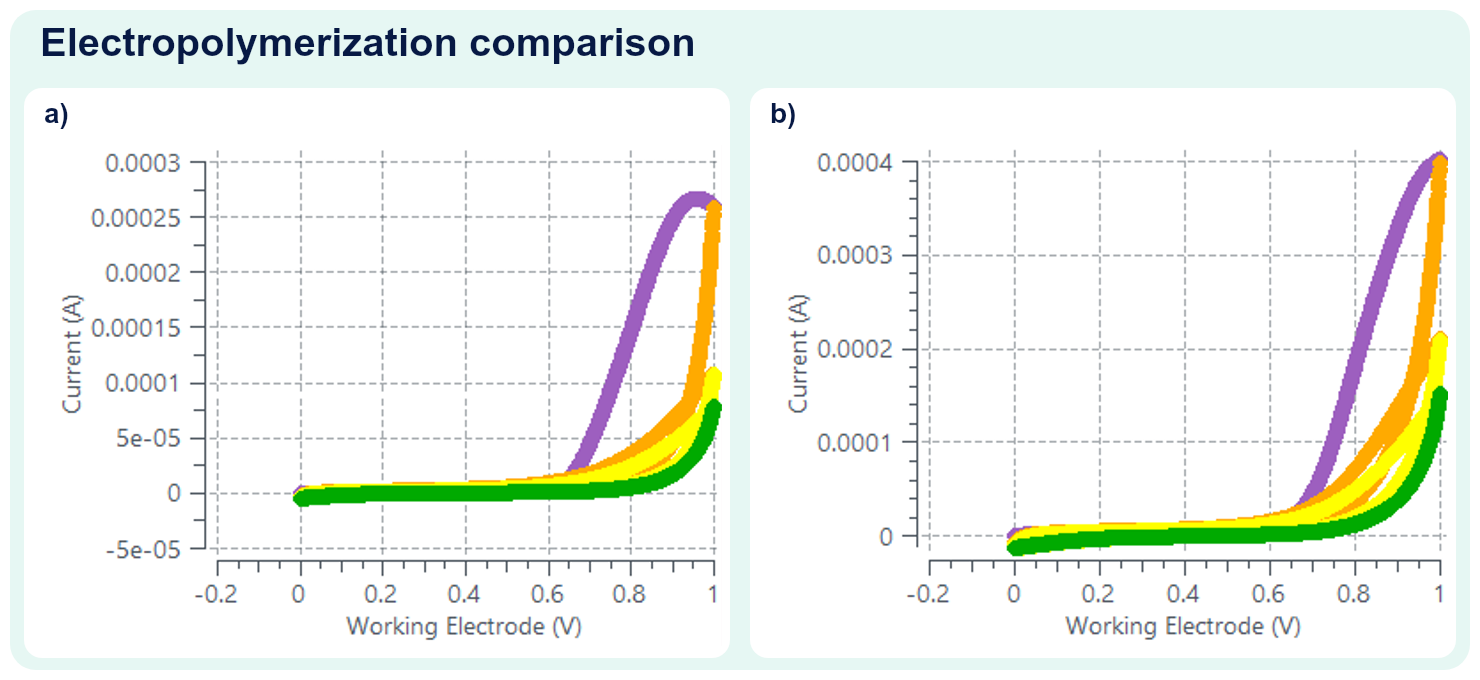
The benefits of rGO surface modification extend beyond improved redox response. In B&G's experiments, rGO-modified screen-printed carbon electrodes exhibited higher anodic currents and distinct current evolution during pyrrole electropolymerization compared with bare electrodes.
These results demonstrate enhanced electropolymerization-related electrochemical activity, highlighting the potential of rGO-modified electrodes for optimising functional polymer-film formation and developing molecularly imprinted polymer (MIP) sensing interfaces. Published studies also illustrate routes to functional sensing layers: Zeng et al. formed a molecularly imprinted dopamine-based copolymer on an electrodeposited rGO layer [1], while Wu et al. combined rGO, polypyrrole and gold nanoparticles for electrochemical ctDNA sensing [2].
What Does This Mean for Custom Sensor Development?
The rGO observations point to two possible roles for a modified electrode: a functional electrochemical interface and a foundation for further modification, including electropolymerized recognition layers such as MIPs. It is still not a complete, validated sensor for every target. Sensing chemistry and measurement methods must be selected around the substance to be detected, the sample matrix and the required analytical performance. Published applications also include rGO electrodes integrated into lateral-flow assays for electrochemical readout [5].
Potential development directions include:
- Heavy-metal sensing: electrode and recognition-layer designs tailored to selected metal ions.
- Chemical analysis: modification approaches chosen for target electroactive compounds or suitable reaction pathways.
- Biomarker sensing: integration with an appropriate recognition element and validated biological-sample workflow.
- Environmental and industrial monitoring: electrochemical measurement integrated with sample handling, electronics and data acquisition.
In addition to rGO, other modification materials—including carbon nanotubes (CNTs), conductive polymers and gold or platinum nanoparticles—may be selected where their properties better match the intended measurement. No single modification is optimal for every analyte.
What Should Be Validated Before Practical Use?
Beyond encouraging CV and electropolymerization curves, a useful sensor-development programme normally considers sensitivity, selectivity, detection range, interference, repeatability, between-electrode reproducibility, stability and performance in real samples. A method with promising laboratory signals still needs appropriate benchmarking for the intended application.
For drop-cast or electrodeposited electrodes alike, consistent fabrication and clearly defined acceptance criteria matter if the interface is to be used beyond an initial laboratory demonstration. For MIP-based devices, controls should also include suitable non-imprinted films (NIPs), template removal and rebinding studies before claiming target recognition.
Need a Functional Electrode or Custom Sensing Solution?
B&G supports rGO-modified electrode supply, custom electrode functionalisation, laboratory testing and electrochemical sensing-system development. We can help define the sensing requirements and identify a practical technical route for your application.
References
- Zeng, Z., Zhao, M., Ma, Z., Mu, Y., Li, X., Wang, Y., & Chen, Y. (2026). Zwitterionic imprinting enables fouling-resistant biomimetic sensing of Staphylococcus aureus in complex food matrices. Food Chemistry, 528, 150963. doi:10.1016/j.foodchem.2026.150963
- Wu, Z., Chen, J., Zhang, Y., Ge, R., Li, Y., Yunusov, K. E., Turakulov, F. M. U., & Jiang, G. (2026). In-situ sampling and monitoring ctDNA from dermal interstitial fluid for tumor diagnosis. Biosensors and Bioelectronics, 298, 118431. doi:10.1016/j.bios.2026.118431
- Gupta, R., Kalkal, A., Mandal, P., Paital, D., Brealey, D., & Tiwari, M. K. (2025). Label-Free Electrochemical Interleukin-6 Sensor Exploiting rGO-Ti₃C₂Tₓ MXene Nanocomposites. ACS Applied Materials & Interfaces, 17(31), 44112–44122. doi:10.1021/acsami.5c06701
- Zhao, Y., Zou, R., Liao, C., Chen, Y., Xu, Z., Liu, S., Chang, G., & He, H. (2025). A transistor array biosensor based on reduced graphene oxide prepared electrochemically for detection of multiplex circulating miRNAs of non-small cell lung cancer in human serum. Sensors and Actuators B: Chemical, 438, 137787. doi:10.1016/j.snb.2025.137787
- Calucho, E., Álvarez-Diduk, R., Piper, A., Rossetti, M., Nevanen, T. K., & Merkoçi, A. (2024). Reduced graphene oxide electrodes meet lateral flow assays: A promising path to advanced point-of-care diagnostics. Biosensors and Bioelectronics, 258, 116315. doi:10.1016/j.bios.2024.116315