
Agriculture & Plant Technologies
From Crop Health Monitoring to Productivity Enhancement.
Improving crop performance requires understanding plant conditions, identifying suitable technologies, and determining what works in practice.
Whether a client needs to monitor crop health, explore ways to improve plant growth, or combine multiple technologies, Blue & Green helps identify and bring together solutions suited to the application.
Understanding Plant Health
Monitoring Plant Conditions Through Optical Sensing
Plant health is influenced by nutrient availability, environmental conditions, and physiological stress. Understanding these factors helps growers make more informed decisions.
How It Works
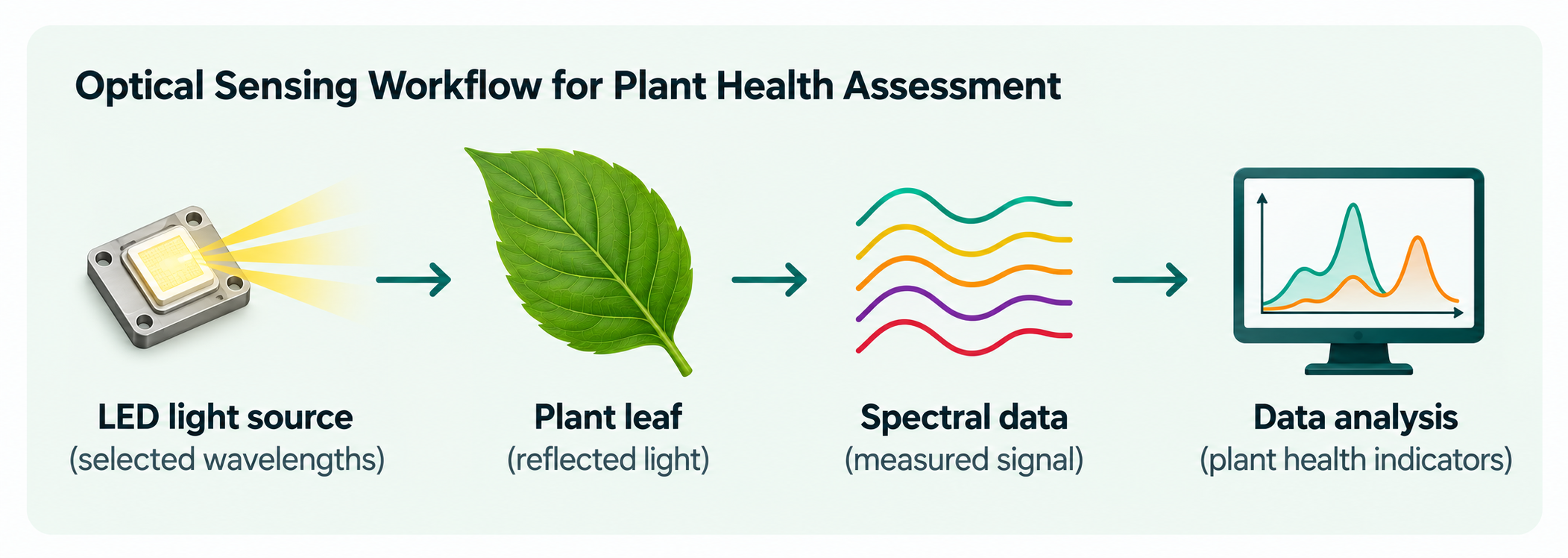
Optical sensing technologies illuminate plant tissue using selected wavelengths of light and measure the resulting spectral response.
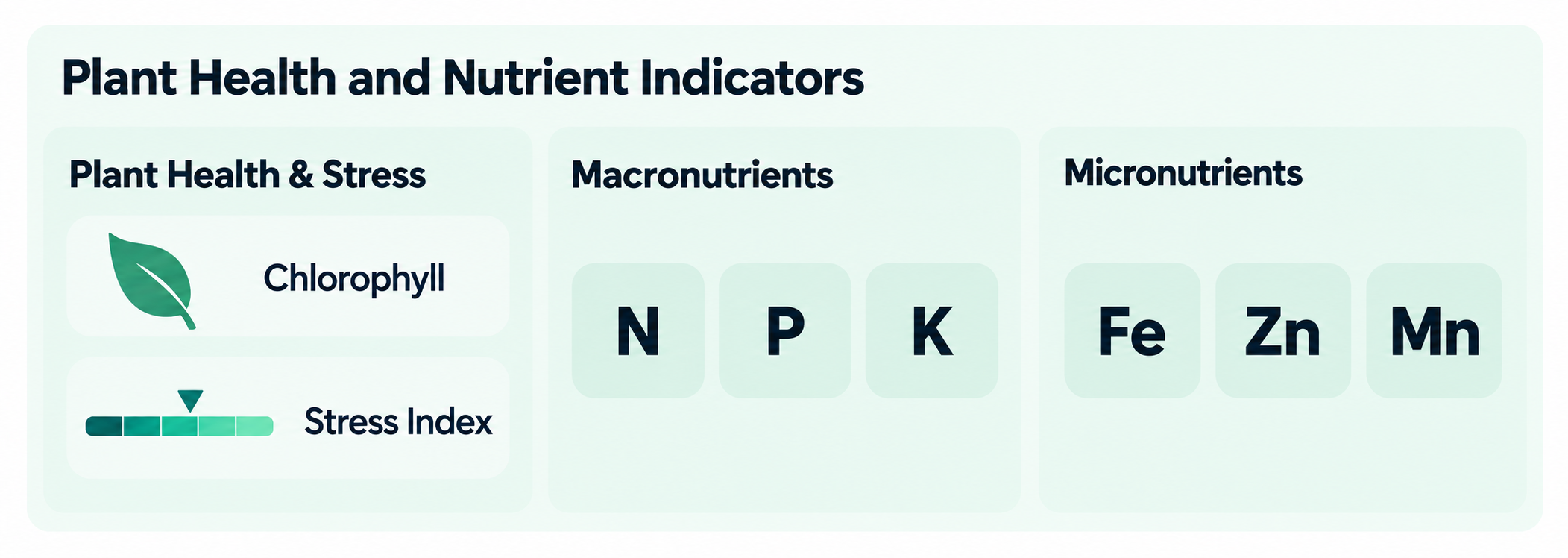
Different plant characteristics affect how light is absorbed and reflected. With appropriate calibration and data analysis, these spectral patterns can help estimate indicators such as chlorophyll content and selected plant health or nutrient-related parameters.
B&G supports the practical application of sensing technologies, including data collection, measurement setup, technical evaluation, and integration where appropriate.
The objective is to turn measurements into useful information about crop conditions.
Supporting Crop Growth & Photosynthesis
Exploring Technologies for Better Plant Performance
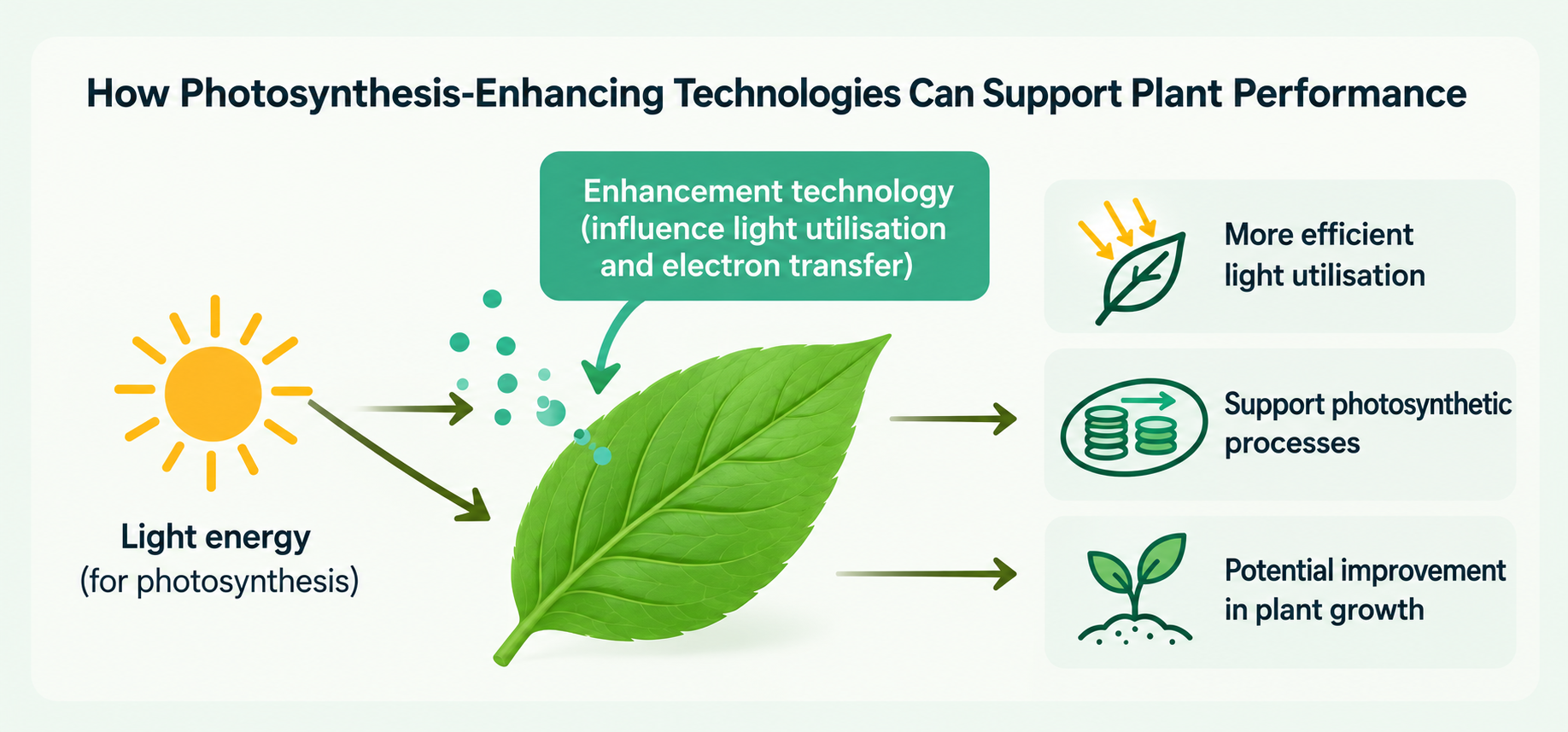
Photosynthesis allows plants to convert light energy into chemical energy that supports growth and development.
The efficiency of this process is affected by light conditions, plant physiology, nutrients, and environmental factors.
How It Works
Certain photosynthesis-enhancing technologies use materials designed to influence light utilisation and electron-transfer processes involved in photosynthesis.
These approaches aim to support photosynthetic performance and potentially improve crop growth. Actual effects depend on the crop, growing conditions, application method, and other management factors.
B&G helps clients evaluate suitable technologies, consider application requirements, and plan practical trials to assess their effectiveness.
How B&G Can Help
Smarter Monitoring. Better Crop Performance.
B&G helps agricultural businesses identify and apply suitable technologies for plant health monitoring and crop performance enhancement, including optical sensing, photosynthesis-enhancing solutions, system integration, and field validation.
Have an Agricultural Challenge?
Tell us what you want to monitor, improve, or develop.
Tell Us Your Challenge