
Product Authentication & Quality Control
From Product Fingerprinting to Better Quality Decisions.
Product identity, authenticity, and consistency are essential for quality assurance across food, herbal medicine, fragrances, and other high-value products.
B&G supports the application of NIR spectroscopy and electronic nose technologies to identify materials, compare product fingerprints, screen for adulteration, and assess product quality.
Spectral Fingerprinting for Product Identification
Rapid, Non-Destructive Material Identification & Authenticity Screening.
UV–Visible–Near-Infrared (UV–Vis–NIR) spectral sensing enables rapid, non-destructive analysis of materials by capturing their characteristic optical fingerprints.
By combining spectral measurements with reference databases and analytical models, B&G helps businesses identify materials, verify product consistency, and screen for potential adulteration or authenticity issues.
How It Works
The optical sensing system measures light reflected from a sample using 44 spectral channels across a wavelength range of 240–1700 nm, covering ultraviolet (UV), visible (Vis), and near-infrared (NIR) regions.
The resulting spectral fingerprint is analysed and compared with reference samples using calibrated models to support material identification, authenticity screening, and quality classification.
Accuracy depends on the sample characteristics, reference dataset, and application-specific validation.
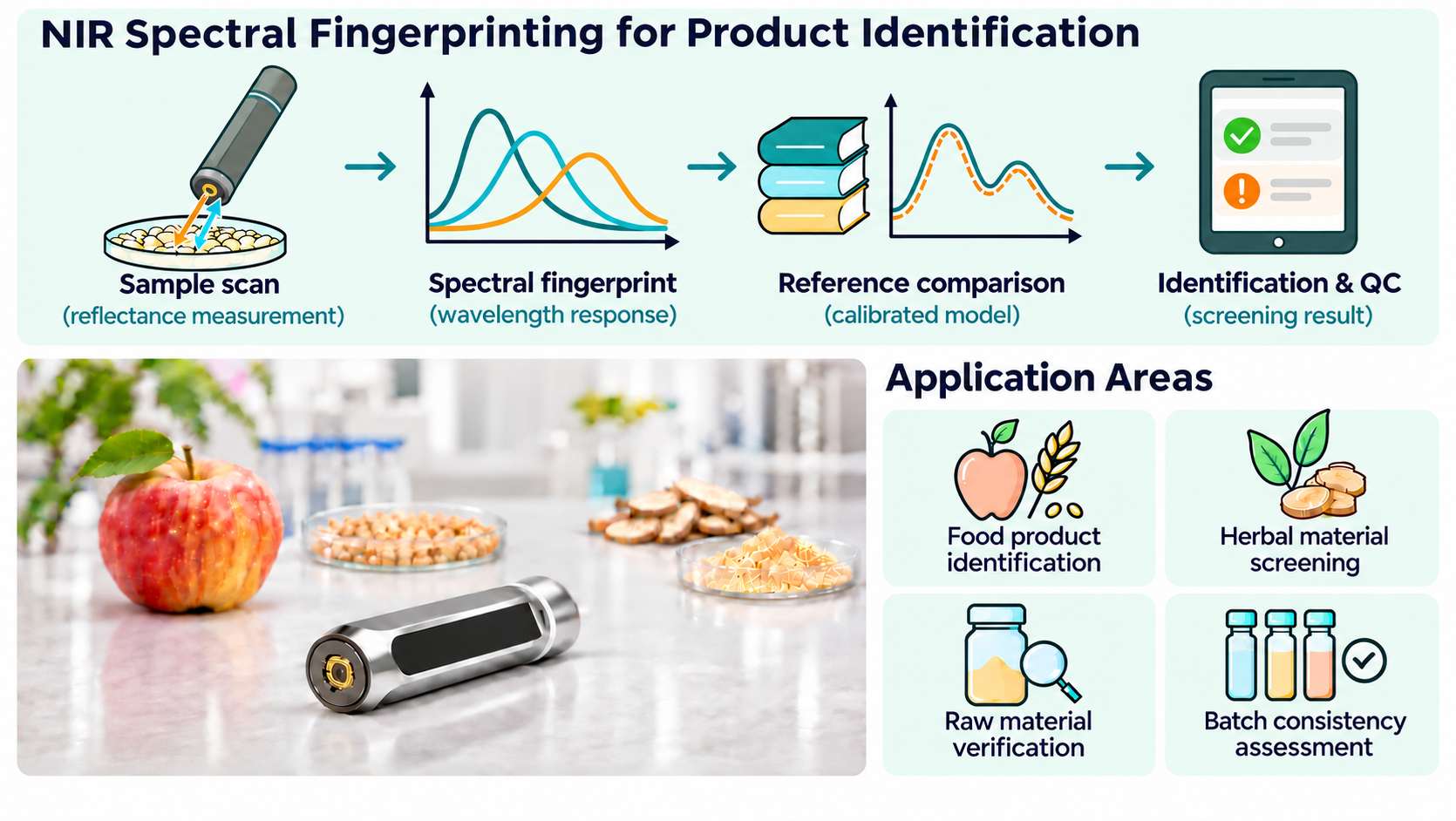
Application Areas
- Food & Agricultural Products
- Chinese Herbal Medicine
- Raw Material Verification
- Product Quality Screening
Electronic Nose for Aroma Fingerprinting
Product Identification, Batch Consistency & Quality Screening.
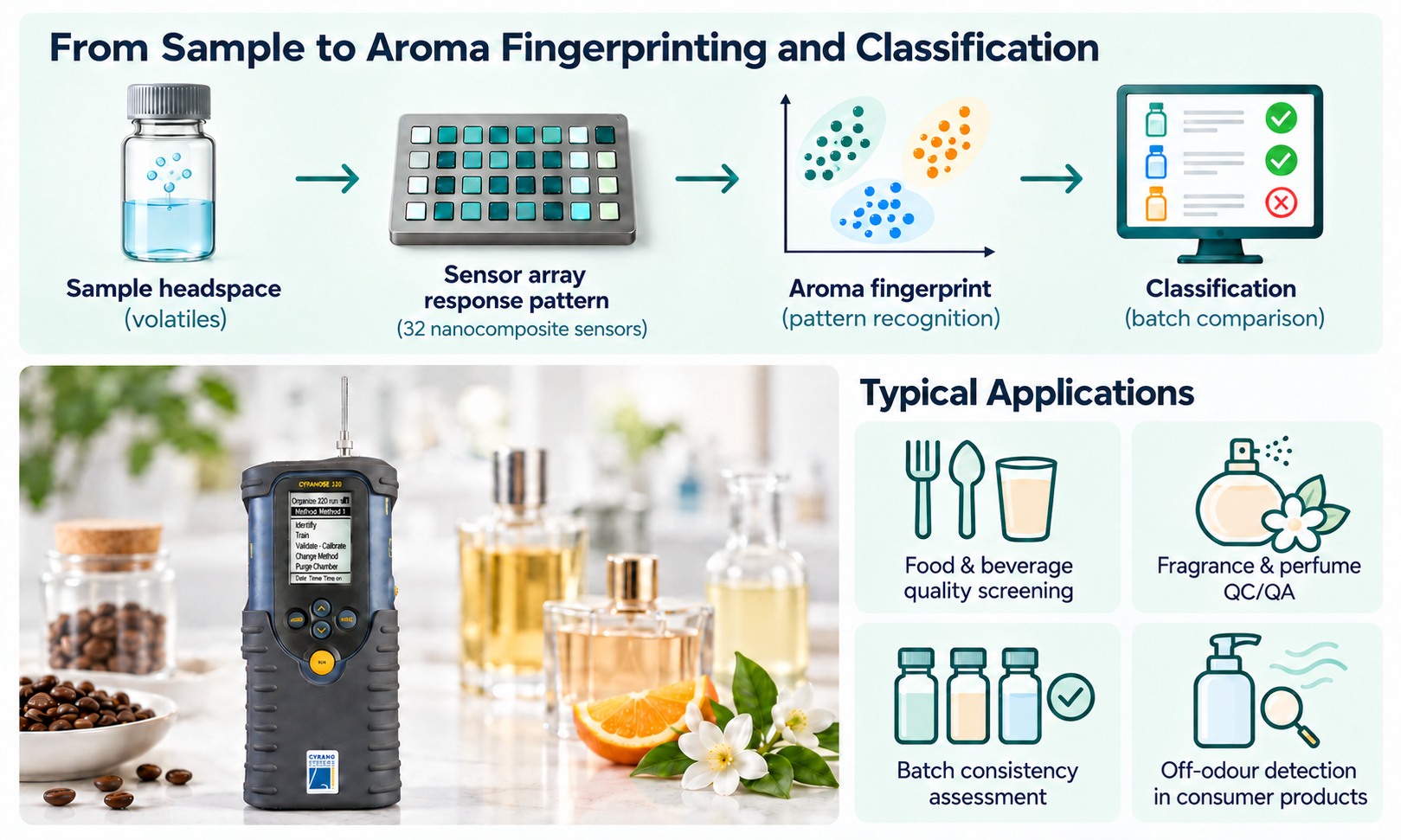
Electronic nose technology generates characteristic aroma fingerprints by analysing the volatile profiles of products.
For food, beverages, fragrances and consumer goods, it supports product differentiation, formulation comparison, batch consistency assessment and screening for unexpected odour changes.
How It Works
The Cyranose 320 uses an array of 32 nanocomposite sensors that respond to volatile compounds released from a sample.
The combined sensor responses create a characteristic aroma fingerprint (Smellprint), which can be compared with reference samples using pattern recognition.
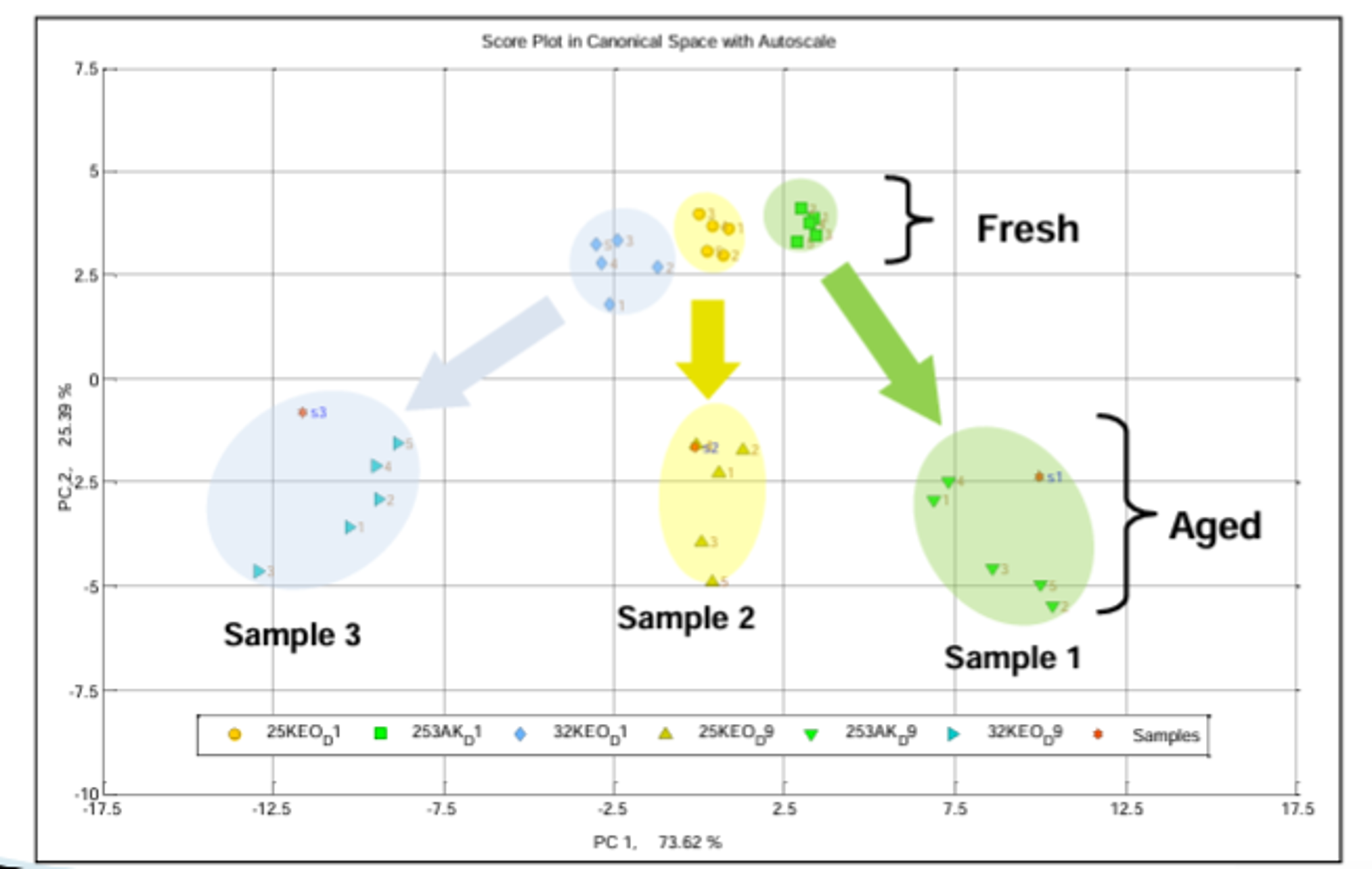
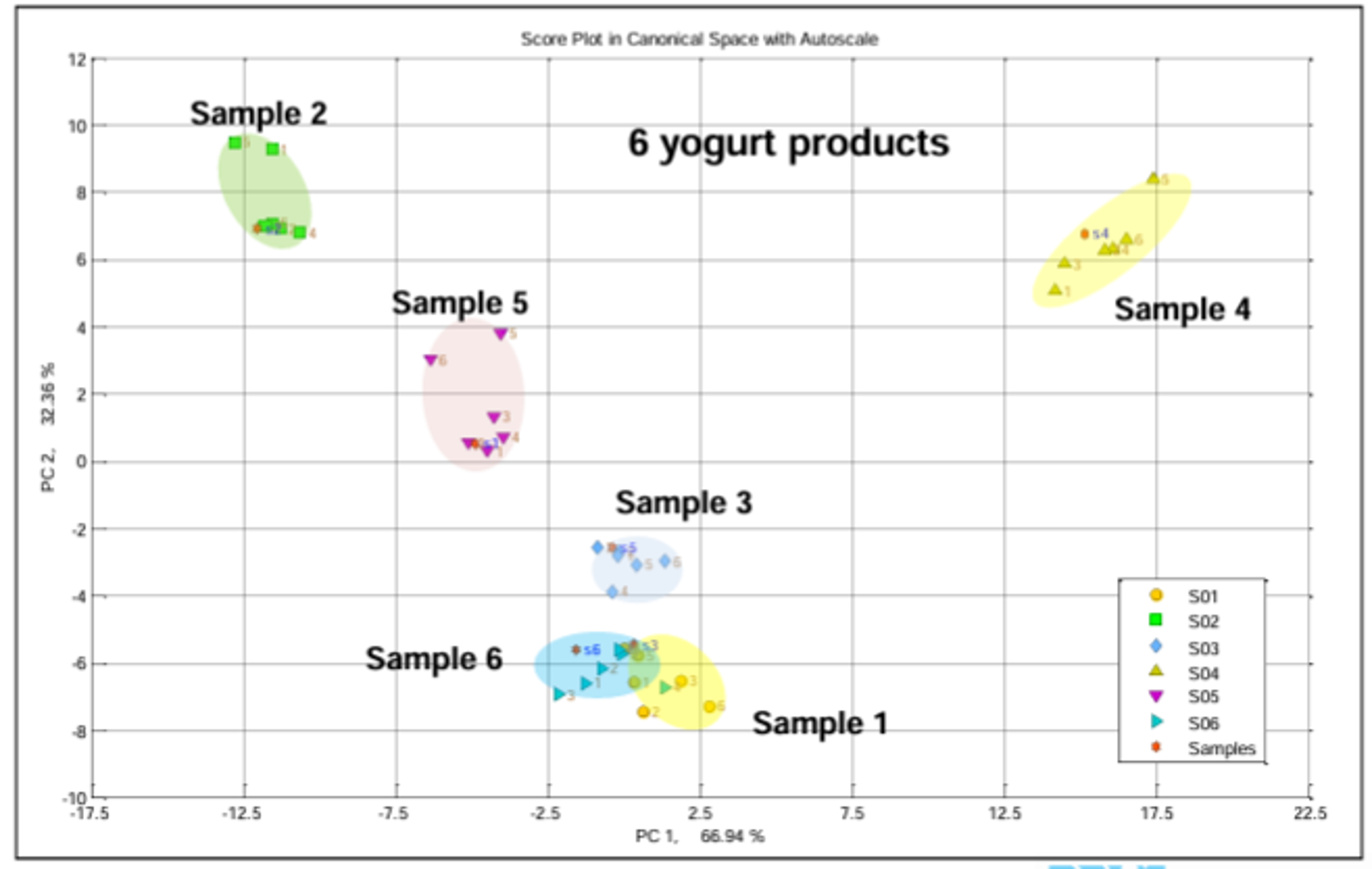
Principal Component Analysis (PCA) helps visualise differences between sample groups, while validated classification models can support product identification, batch verification and quality screening.
Application Areas
- Food & Beverage QC/QA
- Perfume & Fragrance QC/QA
- Raw Material & Formulation Comparison
- Batch Consistency Assessment
- Off-odour Detection
How B&G Can Help
From Product Fingerprints to Confident Quality Decisions.
B&G helps businesses apply NIR spectroscopy and electronic nose technologies for product identification, authenticity screening, and quality control.
Our support includes reference sample selection, testing method development, fingerprint analysis, and integration into practical QC/QA workflows.
Have a Product Authentication or Quality Control Challenge?
Tell us what you need to identify, compare, or verify.
Tell Us Your Challenge